Straight From the Source: When a Drugmaker’s Cash Checkout Beats Your Copay in 2026
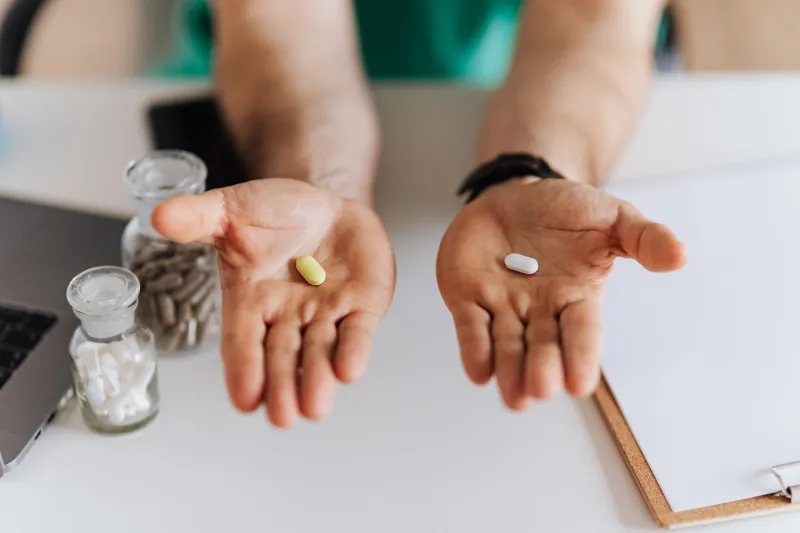
Your pharmacist slides a bottle across the counter and says the number: $47. You have insurance. You also have a phone. On it, the drugmaker’s own online checkout is quoting $32 for the same strength and quantity — before shipping. Suddenly the question is not whether the pharmacy is ripping you off. It is whether the new direct-to-consumer lane is a better deal for your particular prescription.
That question is getting harder to ignore in 2026. Cash-price pharmacies, brand-owned online stores, and manufacturer savings portals have turned the pharmacy counter into a two-lane road. One lane runs through your insurance. The other runs through a checkout cart. At MedSave Access, we are less interested in which lane sounds cooler than in which one leaves more money in your pocket after all the fees, fine print, and follow-up calls.
What ‘manufacturer direct’ actually means
The phrase gets used loosely. There are at least three flavors. First, generic-focused cash pharmacies such as Mark Cuban Cost Plus Drugs, which are not drugmakers but operate with a factory-store ethos: posted prices, a transparent markup, and no insurance required. Second, brand-owned direct channels — think LillyDirect and similar manufacturer storefronts — where a company sells certain products directly to patients, sometimes with telehealth attached. Third, savings-card and cash-discount platforms that negotiate prices but are not pharmacies themselves.
Some of these channels accept insurance. Many do not. Some ship anywhere in the U.S.; others have state restrictions. Some carry only a slice of a company’s portfolio. The label ‘direct’ is less important than the receipt: what will you actually pay, all in, for the exact medicine your prescriber ordered?
The comparison is not sticker price versus copay
The copay on your insurance card is not always your full cost. You may owe a deductible first, then coinsurance, then a copay. A 30-day fill might be cheap while a 90-day fill is not. A manufacturer copay card might cover part of your share — but only at certain pharmacies. On the cash side, the posted price may exclude shipping, a dispensing fee, membership dues, or taxes.
There is also a quieter issue: cash purchases usually do not count toward your insurance deductible or out-of-pocket maximum. For Medicare Part D, cash buys generally do not count toward true out-of-pocket costs, or TrOOP. That does not make cash a bad idea. It means a $10 savings today can slow your progress toward the cap that protects you later in the year. If you are close to your out-of-pocket limit, run the annual math before you jump lanes.
A five-minute side-by-side price check
Start with the exact prescription: drug name, strength, dosage form, quantity, and days’ supply. ‘Same drug’ is not enough; a 30-day supply of 20 mg tablets is a different product from a 90-day supply of 10 mg tablets.
Then ask your insurance plan two questions: What will I pay today at my current pharmacy, and what would I pay for a 90-day fill? Ask whether a deductible applies and whether a manufacturer copay card is already being applied. Next, price the cash channel with the same quantity and days’ supply. Add shipping, any membership fee, and any per-order charge. Multiply by the number of fills you expect in a year.
A simple worksheet helps:
| Cost item | Insurance lane | Cash lane |
|---|---|---|
| Drug cost per fill | $ | $ |
| Deductible or coinsurance | $ | Usually $0 |
| Shipping or dispensing fee | Varies | $ |
| Membership or subscription | Usually $0 | $ |
| Annual total for expected fills | $ | $ |
If the cash lane wins by only a few dollars, the hassle may not be worth it. If it wins by 20% or more over a year, it is worth a test fill — provided the medicine is not one where continuity matters more than cost.
Membership, shipping, and the fine print that eats the gap
A low headline price can hide a membership fee, a cold-chain shipping charge, or a minimum order. Some sites bundle automatic refills; others let you order one time. Check whether shipping is free above a threshold and whether the medication needs refrigeration or special handling. A $5 savings on a temperature-sensitive drug is not a bargain if the package sits on a hot porch.
Also check refill rules. Can you get a 90-day supply? Does the site require a new prescription each time? Are controlled substances excluded? What is the return policy if the package arrives damaged? And who do you call at 9 p.m. when the auto-shipment is wrong? Cash channels can be excellent for straightforward generics and less excellent for medicines that need a pharmacist’s eyes.
Transfer traps and continuity risks
Do not cancel your old pharmacy until the new bottle is in your hand. Ask your prescriber to send a new prescription to the direct pharmacy; many online channels do not accept a traditional transfer from another store. If you use a manufacturer copay card, confirm the direct channel accepts it — cash-only sites usually do not. Keep a list of your other medicines so the new pharmacy can run a safety check, and make sure your insurance plan knows where you are filling if prior authorization or step therapy is involved.
For controlled substances, some stimulants, and specialty drugs, direct-to-consumer shipping may be limited or unavailable. That is not a reason to force it. A slightly higher copay at a local pharmacy can be the cheaper choice when the alternative is a gap in treatment or a week of phone tag.
When your insurance is still the smarter move
Use the insurance lane when you have already met your deductible, when your plan’s out-of-pocket cap is within reach, or when a manufacturer copay card is covering most of your share. Stay with insurance if the cash price does not count toward your deductible or out-of-pocket maximum and you need that credit. Also stay if the drug is specialty, requires REMS monitoring, or needs hands-on pharmacist support. Medicaid and some employer plans have rules that make cash purchases more complicated than they look.
Conversely, cash can be the clear winner for a cheap generic with a high copay, for a brand drug with a posted direct price and no insurance credit you need, or for a short-term prescription where you will not hit any annual threshold anyway.
A sensible rule of thumb for 2026
Compare total annual out-of-pocket cost, not the price of one bottle. Add every fee. Confirm what counts toward your deductible and out-of-pocket cap. Then, if the cash lane still wins by a meaningful margin, try one fill before you move all your prescriptions. The factory-store model is real, but it is not automatically cheaper for every medicine or every insurance plan. The best pharmacy channel is the one that keeps your treatment steady and your budget intact — and sometimes that is still the counter you already know.