The Paid Pharmacy Savings Club: A 2026 Break-Even Check Before You Enroll

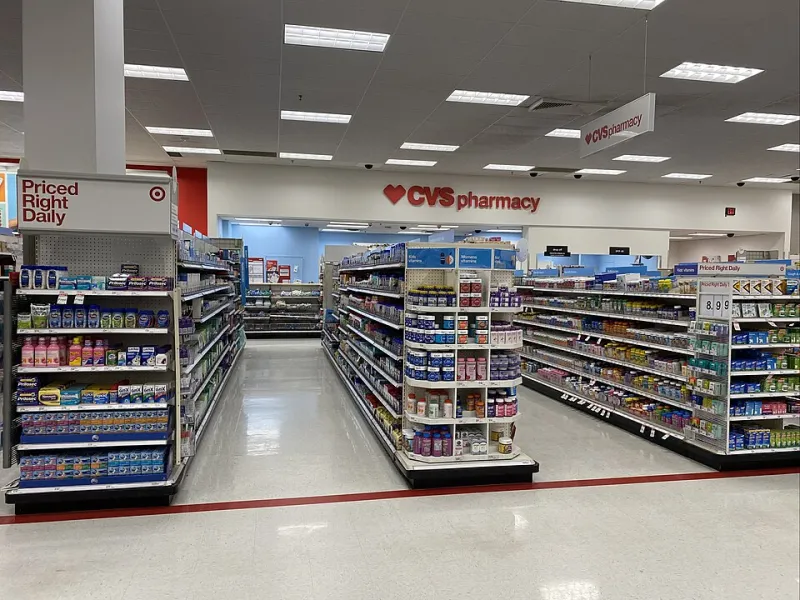
Photo: pharmacy membership card and calculator beside prescription bottles on pharmacy counter, via i.pinimg.com
Pharmacy membership clubs are having a moment. For a flat yearly fee — often $20 to $60, though $36 is a common hook — a chain or independent pharmacy promises 'member-only' prices on generics and sometimes brand drugs. The pitch is tempting: pay a little upfront, save every month. But a club card is not insurance, and it is not automatically a bargain. In 2026, the smart move is to treat the membership like any other subscription: run the numbers, read the fine print, and know what you give up when you hand over the club card instead of your insurance card.
What You Are Actually Buying
A paid pharmacy savings club is a discount program. You pay a fee; the pharmacy agrees to charge you a set cash price on a list of medications. That price may be lower than the pharmacy's usual cash price, and it may be lower than your insurance copay. It is not a health plan. It does not negotiate with your insurer, and it usually does not send a claim to your Part D plan or employer plan.
That last point matters. When you use a discount club or a standalone savings card instead of your insurance, the purchase is typically a cash transaction. The money you spend generally does not count toward your deductible or your annual out-of-pocket maximum. If you are healthy and far from those thresholds, that may be fine. If you are close to meeting a deductible or out-of-pocket cap, a 'cheaper' cash purchase can cost you more later by leaving your insurance spending totals lower than they would have been.
The Break-Even Worksheet
You do not need a spreadsheet to make this decision, but you do need to be honest about your refills. Grab your last few pharmacy receipts and your plan's drug list, then work through these steps.
- Write down the exact annual fee, including any sign-up or card replacement charges.
- List the prescriptions you fill regularly — monthly, every 90 days, or as needed.
- For each drug, find your insurance copay and the club's quoted price. Ask the pharmacy to check the club price with the same quantity and form you actually receive.
- Multiply the monthly difference by the number of fills per year. If a drug costs $20 with insurance and $12 through the club, that is $8 saved per fill. Twelve fills means $96 a year.
- Add up the savings across all your drugs, then subtract the annual fee. That is your rough net savings.
- Before you celebrate, ask whether using the club instead of insurance affects your deductible or out-of-pocket maximum. If it does, estimate how much that matters for the rest of the year.
Here is a simple example. A club charges $36 a year. One monthly generic costs $20 with insurance and $12 through the club. The difference is $8 per fill, or $96 over 12 fills. After the fee, you are ahead by $60. But suppose you still have $500 left on your deductible. Those 12 club purchases may not count toward it. If a later $400 prescription would have been covered after meeting the deductible, paying cash for the generic may have delayed that moment — and wiped out the $60.
Questions to Ask Before You Enroll
A pharmacy counter is a busy place, so bring a short list. The answers should be specific, not just 'it depends.'
- Is the fee monthly or annual, and does it renew automatically?
- Which drugs are excluded from the club, and is the list subject to change?
- Is the quoted price locked for the year, or can it move with the pharmacy's cash price?
- Can I use my insurance and the club on the same purchase? Usually the answer is no, but ask.
- Will club purchases count toward my deductible or out-of-pocket maximum? Get this in writing if you can.
- What is the cancellation and refund policy?
- Is the 'member price' actually lower than the pharmacy's regular cash price, or just a new label on the same number?
- Does joining require me to transfer all my prescriptions to this pharmacy?
Red Flags That Deserve a Second Look
The biggest red flag is a membership that auto-renews without a clear reminder. A $36 fee is easy to forget, and a card you no longer use is just a subscription. Another warning sign is a drug list that shrinks after you join. If the medications you take are excluded, the membership may not help at all.
Watch for 'member prices' that are really just the pharmacy's standard cash price. Some clubs market a discount that was already available to anyone who asked. Also be skeptical of any pitch that tells you to skip your insurance without checking your deductible or out-of-pocket maximum. The club price may be lower today, but the insurance claim may be worth more later.
Finally, treat any claim that a discount card 'works like insurance' as a red flag. It does not. It is a price list with a fee attached, and it usually does not build the spending totals that protect you when a costly prescription shows up.
When a Club Card Can Make Sense
A paid pharmacy club can be a reasonable deal if you pay cash for most of your medications, have no prescription coverage, or have a high copay that is consistently higher than the club price. It can also help if you are not close to a deductible or out-of-pocket maximum and you expect your medication mix to stay steady. In those cases, the membership is simply a prepaid discount, and the break-even math is the whole story.
It makes less sense if you are close to meeting your deductible, if you expect a expensive brand drug later in the year, or if the club excludes the medications you take. It also makes less sense if the annual fee is close to your projected savings. A $36 card that saves you $40 is not worth the paperwork and the risk of an auto-renewal.
A Three-Sentence Script for the Counter
You can keep it simple: 'If I join this club, will this purchase be billed to my insurance or as cash? Will it count toward my deductible or out-of-pocket maximum? And what is the exact annual fee, renewal date, and cancellation policy?' Those three answers will tell you most of what you need to know.
At MedSave Access, we think the best pharmacy savings are the ones you can explain on the back of a receipt. A club card is not evil, and it is not magic. It is a math problem with a renewal date. Run the break-even check for 2026, ask what happens to your insurance totals, and only pay the fee if the savings are real and repeatable.